
Published:10:56 03 Nov, 2026
Steel slag pots usually develop cracks due to repeated thermal cycling, uneven wall thickness, casting defects, unsuitable material selection and mechanical impact during operation. Proper structural design, controlled steel casting, heat treatment and regular inspection help reduce cracking and extend slag pot service life.
Steel slag pots work under demanding conditions in steel mills. Every operating cycle involves receiving hot slag, transportation, dumping and cooling before the pot is used again. Over time, these repeated operations place considerable thermal and mechanical stress on the casting.
Cracks do not always appear suddenly. Some develop gradually from areas exposed to repeated temperature changes, while others originate from internal casting defects or structural weaknesses. Understanding these causes helps steel mills make better decisions when maintaining existing equipment or sourcing replacement steel slag pots.
One of the main reasons behind steel slag pot cracking is repeated heating and cooling.
When molten slag enters the pot, the inner surface heats up much faster than the outside. The temperature difference causes uneven expansion across the wall. Once the slag is discharged, the pot cools and the material contracts again.
This process happens throughout the pot's working life.
The bottom and inner walls are directly exposed to hot slag, while the outer surfaces experience different temperature conditions. These uneven temperature changes create thermal stress within the casting. Repeated exposure can gradually contribute to surface cracks, deformation and material deterioration.
The severity of thermal stress depends on several factors, including slag temperature, wall thickness, cooling conditions and operating frequency. Material selection and structural design should therefore take the actual working environment into account.
The location of a crack can provide useful information about the underlying problem.
The bottom of a steel slag pot carries the weight of the slag and experiences substantial thermal exposure. The transition between the bottom and sidewall is particularly important because differences in geometry and wall thickness can create localized stress.
Lifting lugs are another area that requires attention. During transportation and dumping, these sections carry significant mechanical loads. Poorly designed connections or insufficient reinforcement may increase the risk of cracking.
Wall thickness distribution also affects the performance of the casting. Abrupt changes between thick and thin sections can lead to stress concentration during operation and uneven solidification during manufacturing.
Simply making the entire pot thicker is not necessarily the answer. Excessive differences in section thickness can make casting more difficult and increase the risk of internal shrinkage defects.
A well-designed slag pot needs to balance structural strength, weight and casting requirements.
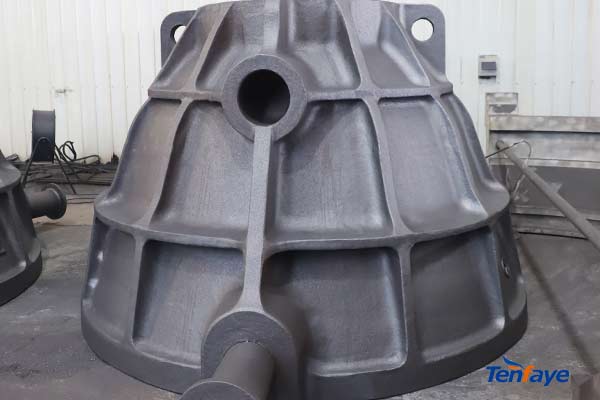
Not all slag pot cracks originate during operation. Some may be related to defects formed during the casting process.
Large steel slag pots are heavy castings with sections of considerable thickness. These areas take longer to solidify, making feeding and solidification control particularly important.
If molten steel cannot adequately feed the areas that solidify last, shrinkage cavities or porosity may develop. Non-metallic inclusions can also affect the integrity of the casting.
Some internal defects are difficult to identify through visual inspection. Under repeated thermal and mechanical loading, they may become potential crack initiation points.
This is why controlling the quality of slag pot casting requires attention throughout production.
CAE casting simulation helps engineers analyze molten metal flow and solidification behavior before pouring. It can identify potential shrinkage-prone areas and provide a basis for adjusting the gating and riser systems.
After casting, ultrasonic testing (UT) can be used to detect internal discontinuities in specified inspection areas. Together with surface inspection and dimensional checks, these methods provide a more complete assessment of casting quality.
The material used for a steel slag pot needs to withstand more than the weight of molten slag.
Repeated exposure to high temperatures, oxidation and thermal cycling can gradually affect material properties. A steel grade with good room-temperature strength does not necessarily offer the same performance under prolonged high-temperature service.
Material selection should consider the actual slag temperature, operating frequency, loading conditions and required service life.
Heat treatment is equally important. An appropriate process helps achieve the specified mechanical properties and manage residual stresses from casting and cooling.
For large steel castings, temperature uniformity during heat treatment deserves particular attention. Thick and thin sections may respond differently to heating and cooling, so the process needs to be controlled according to the casting's dimensions and material requirements.
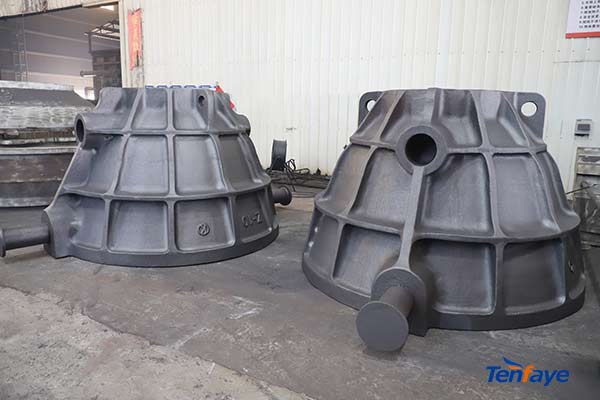
Even a properly manufactured slag pot can develop damage if it is handled incorrectly.
Mechanical impacts during slag removal, improper lifting and uneven loading may introduce additional stress. Using excessive force to remove solidified slag can also damage the inner surface.
Moisture inside a hot slag pot is another serious safety concern because contact between water and molten material can cause violent reactions.
Regular inspection helps identify problems before they become more serious. Steel mills should pay particular attention to:
Cracks around the bottom and sidewall transitions.
Damage or deformation around lifting lugs.
Abnormal wear on the inner surface.
Changes in the pot's overall shape.
Repeated damage in the same locations.
If cracking is identified, the pot should be evaluated by qualified personnel before further use. Inspection records can also help maintenance teams identify recurring problems and determine when replacement is necessary.
For large steel slag pots, preventing defects begins well before the molten steel is poured.
The casting design, wall thickness distribution, gating system and riser arrangement all influence the final quality. Poor control at any of these stages may affect the internal soundness of the casting.
At Tenfaye, steel slag pots are manufactured according to customer drawings and technical requirements. Individual casting capacity ranges from 1 to 150 tons, with slag pot volumes from 1 to 50 m³.
CAE simulation is used to assess filling and solidification behavior, while ultrasonic testing helps inspect internal casting quality. Heat treatment and dimensional inspection are also carried out according to the specified requirements.
For steel mills sourcing custom steel slag pots, it is worth discussing more than just capacity and material grade. Drawing details, operating conditions, inspection requirements and manufacturing processes should all be considered before production.
A properly manufactured slag pot starts with a sound casting design and careful control of every production stage.
If you are planning a new slag pot or replacing an existing one, send your drawings and technical requirements to Tenfaye for a factory quotation.
The common causes include repeated thermal cycling, uneven wall thickness, internal casting defects, material degradation and mechanical impact during operation. In many cases, several factors contribute to cracking rather than one isolated cause.
Cracks may appear around the bottom, bottom-to-sidewall transitions, lifting lugs and other areas subject to concentrated thermal or mechanical stress. The actual location depends on the pot's design and operating conditions.
Yes. Shrinkage cavities, porosity and inclusions can weaken the casting and create potential crack initiation points. These defects may not be visible externally, which is why appropriate internal inspection is important.
Ultrasonic testing (UT) uses high-frequency sound waves to identify internal discontinuities in steel castings. It helps assess areas that cannot be evaluated through visual inspection alone. Inspection coverage and acceptance criteria should follow the agreed technical requirements.
Manufacturers can improve casting quality through proper structural design, controlled wall thickness, optimized gating and riser systems, CAE casting simulation, appropriate heat treatment and non-destructive testing.
Manufacturers generally need the product drawings, required capacity or volume, material specifications, operating conditions and inspection requirements. Existing samples or reference drawings can also help clarify the manufacturing requirements.
If you have any other questions, please feel free to contact whatsapp: +8618037881433 ,
you can also leave us message, we will warmly serve for you!