
Published:14:10 09 Nov, 2026
Quick Summary
Rolling mill chocks are critical cast steel components that support work roll and backup roll bearings in rolling mills. Their structural design, material properties and machining accuracy affect load transfer, roll alignment and operating stability. This guide explains rolling mill chock structures, material selection, common failure causes and maintenance practices.
Rolling mill chocks play an important role in maintaining roll alignment and supporting stable rolling operations. Although they are often regarded as bearing housings, their function goes beyond simply holding bearings. They transfer rolling loads to the mill stand, maintain the position of work rolls and backup rolls, and help control the movement of the roll assembly during operation.
In hot and cold rolling mills, continuous loading, vibration, temperature changes and repeated roll changes place considerable demands on chock strength and dimensional stability. Understanding their structure, material selection and common failure mechanisms can help steel producers make better decisions about inspection, maintenance and replacement.
A rolling mill chock is a structural housing that supports the roll neck bearing at each end of a rolling mill roll. It is installed inside the mill stand housing and transfers the forces acting on the roll assembly to the mill frame.
In a typical four-high rolling mill, there are four rolls: two work rolls and two backup rolls. Each roll is supported by bearing chocks at both ends, forming separate work roll and backup roll assemblies.
Work roll chocks and backup roll chocks have different structural requirements because they operate under different loading conditions and installation arrangements.
The main functions of rolling mill chocks include:
Bearing support: Provide a housing for the roll neck bearings and maintain their correct positioning.
Load transmission: Transfer rolling forces from the rolls through the bearings and chocks to the mill stand.
Roll alignment: Help maintain the correct position of the rolls during operation.
Operational stability: Work with liners, keeper plates and other components to control movement and clearance within the mill housing.
A properly manufactured chock contributes to stable roll positioning, reliable bearing performance and consistent rolling conditions.
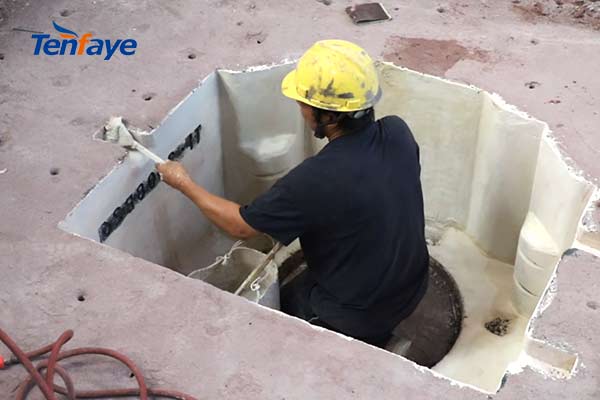
The structure of a rolling mill chock varies depending on the mill type, roll arrangement, bearing system and equipment manufacturer's design. However, several functional areas are commonly found in a typical chock assembly.
Bearing Bore
The bearing bore is the machined opening that accommodates the roll neck bearing. Its dimensional accuracy, roundness and surface finish directly affect bearing installation and operating conditions.
Incorrect bore dimensions or excessive wear can result in improper bearing fits, uneven load distribution and premature bearing damage.
Chock Body
The chock body is the main load-bearing structure. It must withstand the forces transferred from the roll bearings while maintaining sufficient stiffness to limit deformation.
Its overall geometry and wall thickness are determined by the rolling loads, bearing arrangement and mill stand configuration.
Liner and Contact Surfaces
Chocks interact with the mill housing through sliding or guiding surfaces. Wear plates and liners are commonly installed at these contact areas to reduce friction and protect the main structural surfaces.
As liners wear unevenly, the clearance between the chock and mill housing can change. This may affect roll alignment and contribute to additional mechanical loading.
Keeper Plates and Retaining Components
Keeper plates and related retaining components help control axial movement and maintain the correct position of the chock assembly. Their condition and installation accuracy are important for preventing unwanted movement and misalignment.
These components must be inspected together with the chock body rather than treated as independent maintenance items.
Material selection has a direct influence on the strength, toughness and service performance of rolling mill chocks.
Because chocks are exposed to heavy loads and repeated stress cycles, the material must provide sufficient mechanical strength and resistance to fatigue under the intended operating conditions.
Cast steel is used for many heavy-duty rolling mill chock applications, particularly where large structural sections and complex geometries are required.
The material selection process generally considers the following factors:
Mechanical Strength
The chock body must withstand the maximum loads transmitted through the roll neck bearings without excessive deformation. Material strength should be evaluated against the actual loading conditions rather than selected by grade name alone.
Toughness and Fatigue Resistance
Rolling mill equipment experiences repeated loading during production. Adequate toughness and fatigue resistance help reduce the risk of crack initiation and structural failure.
Casting Characteristics
For large and complex chock bodies, casting quality is also important. The manufacturing process must control solidification and cooling to reduce the risk of shrinkage defects and internal discontinuities.
Heat Treatment Requirements
Heat treatment is selected according to the specified material grade, component dimensions and required mechanical properties. Proper process control helps achieve consistent material performance throughout large cast sections.
The final material grade should follow the original equipment manufacturer's drawings or the buyer's approved technical specifications. Substituting materials without engineering approval may affect the component's performance and service life.
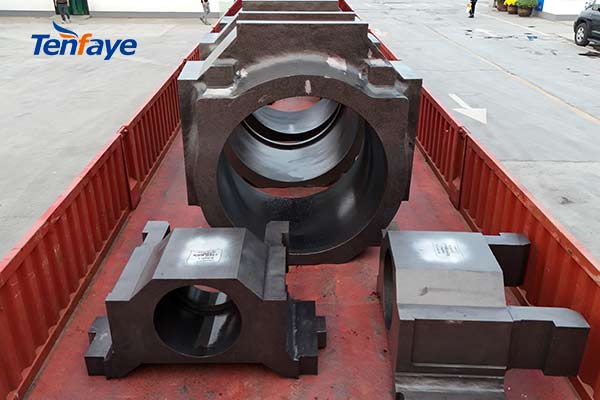
Rolling mill chocks operate under demanding mechanical conditions. Over time, wear, misalignment, fatigue and improper maintenance can affect their performance.
Not every operating problem originates from the chock body itself. Bearing condition, lubrication, assembly clearances and mill housing alignment should also be considered during failure analysis.
Cracks and Fatigue Damage
Repeated loading can cause fatigue damage, particularly around areas where stress concentrations occur. Cracks may develop near transitions in cross-section, mounting areas or other highly stressed regions.
Sudden load changes, excessive operating loads and pre-existing casting defects can also contribute to cracking.
Regular visual inspection and suitable non-destructive testing can help identify potential defects before they develop into more serious failures.
Wear on Contact Surfaces
The surfaces between the chock and mill housing are subject to friction and repeated movement. Over time, liners, wear plates and mating surfaces may become worn.
Uneven wear can increase clearances, allowing excessive chock movement and affecting roll alignment. In severe cases, this may contribute to vibration and additional loading on the bearing assembly.
Bearing Bore Wear
The bearing bore is a critical fitting surface. Repeated installation, operation and improper maintenance can cause dimensional changes or surface damage.
An incorrect bearing fit may lead to uneven contact, abnormal heating or reduced bearing service life. Bore dimensions and surface conditions should therefore be checked during scheduled maintenance.
Deformation and Misalignment
High rolling loads, inadequate structural stiffness, improper assembly or uneven wear can affect the geometry and alignment of the chock assembly.
Misalignment may increase the load on certain bearing areas and cause accelerated wear of liners and related components.
Identifying the actual cause is essential before deciding whether the chock needs machining, reconditioning or complete replacement.
Effective maintenance is not limited to checking whether the chock body has visible cracks. The entire chock assembly and its contact interfaces should be inspected.
Several maintenance practices can help extend service life:
Inspect Bearing Fits and Bore Dimensions
Check the bearing bore for wear, surface damage and dimensional changes. Confirm that bearing fits remain within the equipment manufacturer's specified tolerances.
Check Liners and Wear Plates
Inspect contact surfaces for uneven wear, looseness and damage. Replace worn components when necessary to maintain proper clearance between the chock and mill housing.
Monitor Lubrication Conditions
Follow the bearing manufacturer's lubrication recommendations. Check lubricant supply, contamination and leakage, and investigate abnormal bearing temperatures or unusual operating noise.
Check Alignment and Clearances
Measure the relevant horizontal and axial clearances during planned maintenance. Uneven clearance can cause roll misalignment and increase stress on the chock and bearing assembly.
Perform Periodic NDT Inspection
For critical or heavily loaded components, suitable non-destructive testing methods can help identify surface and internal defects. The inspection method should be selected according to the material, component geometry and applicable acceptance criteria.
Keeping maintenance records of measurements, repairs and inspection findings also helps identify progressive wear and recurring problems.
Not every worn rolling mill chock needs to be replaced. Some components can be reconditioned through machining or the replacement of wear plates, depending on their remaining condition and the manufacturer's requirements.
However, replacement should be considered when:
Structural cracks or damage cannot be reliably repaired.
The bearing bore exceeds its permitted dimensional limits.
Severe deformation affects the original geometry or alignment.
Repeated repairs no longer provide reliable operating performance.
The component cannot meet the required inspection or acceptance standards.
Before ordering a replacement, buyers should confirm the original drawings, material grade, bearing arrangement, machining dimensions and inspection requirements.
For older rolling mills where original drawings are unavailable, dimensional measurements, equipment information and existing component samples may help establish the technical requirements. Any reconstructed design should be reviewed and approved by the responsible equipment engineer.
For heavy-duty rolling mill applications, the quality of the cast ste el chock body is an important part of overall component reliability.
Tenfaye manufactures custom large steel castings for industrial equipment, including rolling mill chocks. With casting capabilities for individual components weighing from 1 to 150 tons, we support custom production according to customer drawings and technical requirements.
Our manufacturing scope includes casting, heat treatment, machining and quality inspection. Material specifications, machining dimensions and inspection requirements can be coordinated according to the approved drawings.
Have a rolling mill chock project or replacement requirement? Send us your drawings for a factory quotation.
1. What is the difference between a work roll chock and a backup roll chock?
A work roll chock supports the bearings of the work roll, while a backup roll chock supports the bearings of the backup roll. Their dimensions, structural arrangements and installation requirements differ depending on the mill design.
2. What materials are commonly used for rolling mill chocks?
Cast steel is used in many heavy-duty rolling mill chock applications. The specific grade depends on the component design, loading conditions, mechanical property requirements and OEM specifications.
If you have any other questions, please feel free to contact whatsapp: +8618037881433 ,
you can also leave us message, we will warmly serve for you!