Quick Summary:When selecting a heavy steel casting supplier, focus on five core criteria: casting simulation analysis (to prevent internal shrinkage and cracking), chemical composition and heat treatment control, non-destructive testing (100% UT/MT), in-house heavy machining capabilities, and melting capacity alongside a proven track record in similar projects.
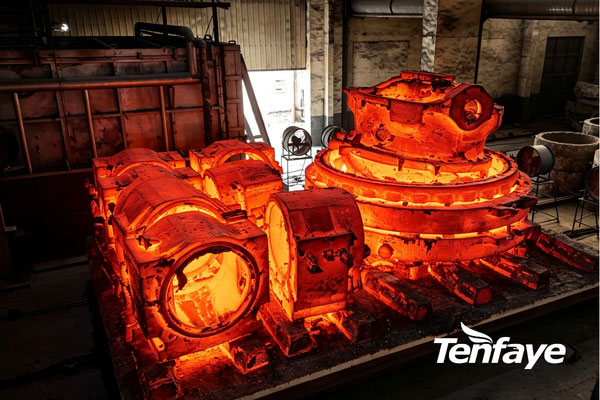
In the building materials, mining, metallurgy, and heavy equipment industries, heavy steel castings (such as slag pots,
girth gears, and riding rings) are critical components characterized by large single-piece tonnage and harsh operating conditions. When procuring such products, evaluating suppliers solely on price often leads to issues like internal defects, machining out-of-tolerance, or reduced service life.
Based on actual manufacturing and delivery workflows, here are the key factors for evaluating a heavy foundry and controlling product quality:
1. Front-End Process Analysis & Casting Simulation
- Heavy steel castings are prone to shrinkage porosity, shrinkage cavities, and cracking during solidification. A qualified foundry performs mold filling and solidification analyses using simulation software (such as MAGMA or ProCAST) prior to pattern making:
- Hot Spot & Shrinkage Prediction: Simulation determines the optimal placement of risers and chills to prevent internal defects in critical load-bearing areas (e.g., slag pot trunnions and bottom transition zones).
- Wall Thickness Optimization: It evaluates the design wall thickness and suggests reasonable draft angles and transition fillets.
2. Chemical Composition & Heat Treatment Control
- Material performance directly dictates the casting's temperature resistance, fatigue strength, and load-bearing capacity:
- Pre-Furnace Chemical Analysis: Optical Emission Spectrometers (OES) are used for rapid chemical analysis of each heat of molten steel to ensure carbon, silicon, manganese, and harmful elements (sulfur, phosphorus) stay within specs.
- Heat Treatment Process: Heavy castings must undergo standardized normalizing, tempering, or annealing to relieve internal stress, refine grain structure, and improve mechanical properties. Buyers can request heat treatment temperature logs.
3. Non-Destructive Testing (NDT) & Quality Acceptance
A flaw-free surface does not guarantee internal sound quality. Critical zones must have clear NDT standards:
- Ultrasonic Testing (UT): Primary method for detecting internal shrinkage cavities, slag inclusions, and cracks, focusing on main stress-bearing zones like trunnions and load-bearing beams.
- Magnetic Particle Testing (MT) / Liquid Penetrant Testing (PT): Used for detecting surface and near-surface micro-cracks.
- Clear Acceptance Criteria: NDT grades (corresponding to ISO, ASTM, or GB standards) must be specified in the contract or technical agreement to prevent delivery disputes.
4. Machining Capability & Dimensional Accuracy
Heavy steel castings usually feature mating surfaces and mounting holes, placing high demands on machining equipment:
- Machining Allowance Control: Dimensional tolerances of raw castings must match machining allowances to prevent under-casting or excessive machining costs.
- Equipment Capability: Evaluate whether the manufacturer has matching large-scale vertical lathes, gantry milling machines, or horizontal boring machines to enable integrated "casting + machining" delivery, reducing transport costs and liability risks.
5. On-Site Equipment & Track Record
To assess a heavy foundry's actual capacity, focus on the following hardware and experience:
- Melting & Crane Tonnage: The single-heat capacity of Electric Arc Furnaces (EAF)/refining furnaces and the maximum lifting capacity of overhead cranes directly determine the maximum single-piece casting weight the plant can handle.
- Track Record for Similar Products: Review historical delivery records and factory test reports for similar structural parts (e.g., slag pots, kiln components) to gauge experience in managing complex structures.
When evaluating heavy steel casting suppliers, focus on process simulation capabilities, NDT execution rigor, heat treatment control, and track record with similar projects. Defining NDT standards and acceptance agreements in the technical specification phase is the most effective way to ensure on-time, high-quality delivery.
We support on-site factory audits and live virtual tours. For drawing evaluations or audit inquiries, feel free to contact us—our team will respond within 24 hours.