
Published:15:00 16 Oct, 2026
Quick Summary
Choosing a rotary kiln support roller manufacturer requires careful evaluation of material selection, casting quality, machining accuracy, and delivery planning. Tenfaye manufactures custom large steel castings to customer drawings and technical specifications. Send your drawings and requirements for a quotation.
A support roller is a key part of a rotary kiln support system. It carries the kiln shell and its load through the riding ring. It also helps the kiln rotate smoothly.
In cement production, support rollers operate under heavy loads and continuous rotation. Material selection, casting quality, machining accuracy, and installation fit all affect their performance.
For cement plant purchasing and maintenance teams, price should not be the only factor when replacing a support roller. A manufacturer with experience in large steel castings can help reduce the risks of dimensional mismatch, installation problems, and additional maintenance.
What should you check when selecting a rotary kiln support roller manufacturer?
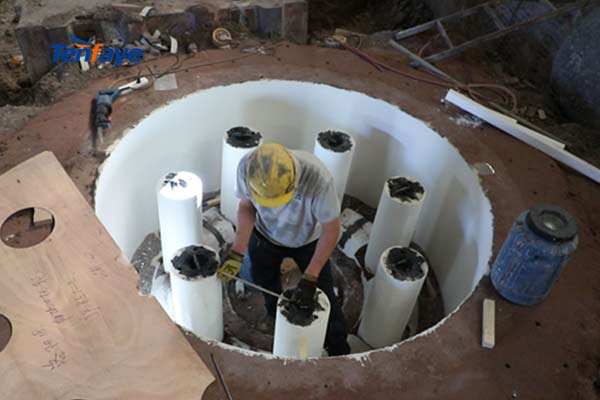
Support roller materials should match the kiln design, load, operating conditions, and original specifications. Different steel grades have different strength, toughness, hardness, and heat treatment characteristics. The material grade alone cannot determine whether a roller is suitable.
Cast steel grades such as ZG35CrMo and ZG42CrMo may be used for certain heavy-duty support roller applications. The final selection should follow the equipment design and technical specifications.
Before placing an order, check the following:
Material grade and chemical composition: Confirm that they meet the drawing and purchase specifications.
Mechanical properties: Check tensile strength, yield strength, elongation, and impact properties where required.
Heat treatment: Confirm that the process suits the material, casting section size, and required properties.
Working surfaces and fitting areas: Check the specified hardness and dimensional requirements.
For replacement parts, start with the original drawings, equipment model, and existing technical records. If the old roller shows abnormal wear or other signs of failure, review the maintenance history before changing the material or specifications.
Large support rollers often have heavy sections and high load requirements. Casting defects, such as shrinkage cavities and shrinkage porosity, can affect internal quality. Machining errors can also affect dimensions and installation fit.
When evaluating a supplier, focus on the following processes.
Casting Process Control
Mold preparation, molding, melting, pouring, and cleaning must suit the casting design and material requirements. For large steel castings, solidification control and internal quality are also important.
Heat Treatment and Property Testing
Heat treatment should be based on the material grade, casting dimensions, and technical specifications. Chemical composition, mechanical properties, and hardness should be tested where required. Relevant records should be retained.
Machining and Dimensional Inspection
The roller surface, shaft journals, and fitting areas must be machined to the drawing. Depending on the requirements, inspection may cover dimensional tolerances, roundness, coaxiality, and surface finish.
Non-Destructive Testing
Ultrasonic testing (UT) and magnetic particle testing (MT) can be specified where needed. The testing methods, coverage, and acceptance criteria should be agreed upon before production.
Tenfaye manufactures large steel castings to customer drawings and technical specifications. For custom parts such as rotary kiln support rollers, buyers should confirm the material grade, critical dimensions, inspection requirements, and scope of machining before placing an order.
Rotary kiln support rollers are often made to suit specific equipment models and installation dimensions. For cement plants planning a shutdown, delivery timing can also affect maintenance schedules.
Before choosing a supplier, confirm the following:
Are the drawings complete, with all critical dimensions and technical requirements?
How will casting, heat treatment, and machining be scheduled?
Are intermediate inspections, third-party testing, or customer inspections required?
Do the packaging, corrosion protection, transport, and delivery arrangements meet the project schedule?
Production time depends on casting weight, design complexity, heat treatment, machining scope, and inspection requirements. Instead of asking only for a general lead time, request a clear production schedule after the technical details have been confirmed.
For replacement rollers, the original drawings may not always be available. In this case, provide the equipment model, existing part dimensions, photos, and any available technical records. These details help the supplier assess the project.
Buying a support roller involves more than purchasing a steel casting. Technical confirmation, inspection, acceptance, and installation requirements also need attention.
Before placing an order, agree on the required quality documents. These may include:
Chemical composition and mechanical test reports
Heat treatment records or relevant inspection documents
Dimensional inspection reports
Non-destructive testing reports, as specified in the technical agreement
Product identification, packaging, and delivery documents
The exact documents depend on the purchase specifications. Confirm their availability before production starts.
If the old roller shows abnormal wear, surface spalling, or cracks, provide photos, the affected areas, operating records, and maintenance history where available. These details can help technical staff identify areas that need further investigation. However, photos alone cannot establish the cause of failure.
A supplier with relevant large steel casting experience can help coordinate production and inspection requirements. Clear technical agreements also help reduce problems during procurement, manufacturing, and maintenance.
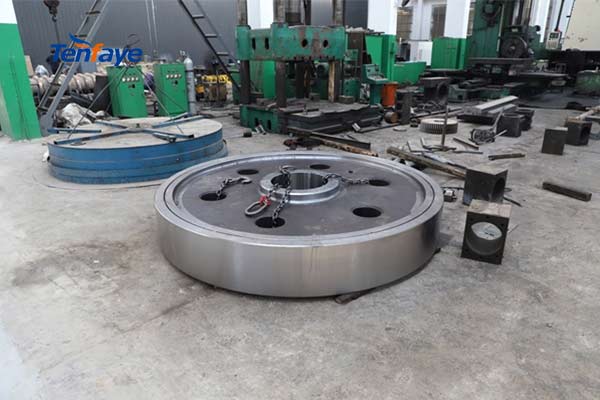
Material selection depends on the equipment design, load, component structure, and operating conditions. Some projects specify cast steel grades such as ZG35CrMo or ZG42CrMo. The final grade, chemical composition, heat treatment, and mechanical properties should follow the original drawings and technical specifications.
The roller surface and fitting areas must meet the specified dimensional and geometric tolerances. Machining errors can affect installation fit and operating conditions. Critical dimensions and acceptance criteria should therefore be agreed upon before production.
Not necessarily. The decision depends on wear severity, cracks, dimensional changes, operating conditions, and the equipment manufacturer's maintenance requirements. A qualified professional should inspect the roller before deciding whether repair or replacement is necessary.
Provide the part drawing, material grade, critical dimensions, quantity, inspection requirements, and delivery location. If the drawing is incomplete, include the equipment model, photos of the existing part, and available measurements. This information helps clarify the manufacturing requirements.
Choosing a rotary kiln support roller manufacturer requires more than comparing prices. Material selection, casting quality, machining accuracy, delivery planning, and inspection documents all deserve attention.
Tenfaye manufactures large steel castings to customer drawings and technical specifications. For custom rotary kiln support rollers and other large steel castings, buyers should provide the drawings, material requirements, quantity, and inspection criteria. This helps define the manufacturing scope and prepare an accurate quotation.
Need a custom rotary kiln support roller or another large steel casting?
Send your drawings and technical specifications to Tenfaye. Include the material grade, quantity, machining requirements, and target delivery date to request a project assessment and quotation.
If you have any other questions, please feel free to contact whatsapp: +8618037881433 ,
you can also leave us message, we will warmly serve for you!