Quick Summary
Ball mill girth gears can fail due to tooth wear, pitting, broken teeth, misalignment, and manufacturing issues. Proper lubrication, installation, inspection, and manufacturing control can help extend their service life.
A ball mill girth gear operates under heavy loads and continuous stress, making it a key part of the drive system. Wear, pitting, or broken teeth can affect normal operation and, in severe cases, lead to unplanned downtime.
Common Causes of Ball Mill Girth Gear Failure
1. Tooth Wear
Poor lubrication, contaminated lubricant, and incorrect gear meshing can all contribute to faster tooth wear. Over time, worn teeth can affect the tooth profile and lead to less stable gear operation.
2. Pitting
Under high contact loads, repeated operation can cause fatigue pitting on the tooth surface. Material properties, tooth hardness, and lubrication all affect the risk of pitting.
3. Broken Teeth
Overloading, impact loads, stress concentration, or problems during casting, heat treatment, or machining can lead to cracks at the tooth root. If the damage progresses, the tooth may eventually break.
4. Installation and Alignment
Poor installation or misalignment between the girth gear and pinion can cause uneven loading across the tooth surface. This puts more load on certain areas of the teeth and can accelerate local wear.
5. Manufacturing Quality
The casting, heat treatment, and gear machining of a large girth gear all have a direct impact on its service life. Material quality, internal defects, tooth hardness, and machining accuracy need to be properly controlled throughout the manufacturing process.
How to Extend Girth Gear Service Life
Choosing the right material and manufacturing process is only the starting point. Proper lubrication, regular inspection of tooth wear, and correct alignment between the girth gear and pinion are also important for long-term operation. Avoiding prolonged overloading can further reduce unnecessary wear and stress.
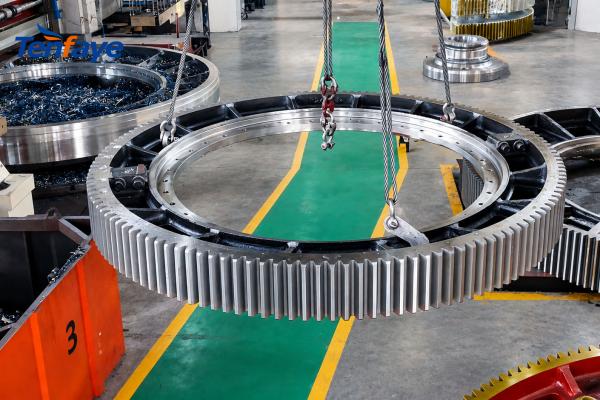
Tenfaye manufactures large cast steel girth gears to customer drawings, dimensions, and technical requirements. Both integral and segmented designs are available, with heat treatment, gear machining, and non-destructive testing carried out according to project requirements.
If you need a replacement or custom girth gear for a ball mill, send us your drawing or specifications. We can review the requirements and confirm the manufacturing details.