Girth Gear FAQ: Common Questions About Ball Mills and Rotary Kilns
Published:16:09 27 Aug, 2026
Quick Summary
Girth gears are important parts of the drive systems of large rotary equipment. Their design, material, manufacturing quality, installation, alignment, and lubrication can all affect equipment performance and service life. This article answers common questions about girth gear applications, materials, wear, installation, maintenance, and replacement. It is intended as a practical reference for engineers and purchasing teams in the cement, mining, metallurgy, and mineral processing industries.
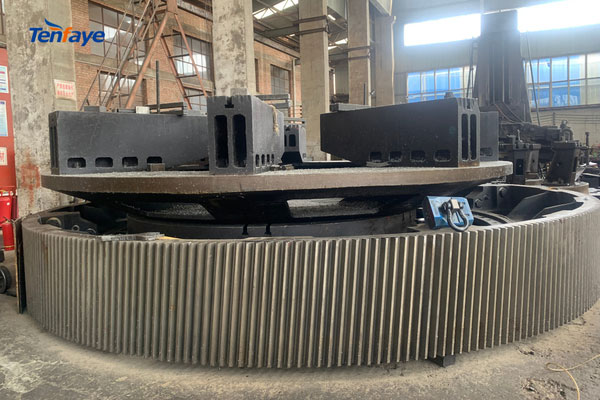
A girth gear is a large ring gear installed around the shell of rotary equipment. It normally works together with a pinion. The motor transfers power through the gearbox to the pinion. The pinion then drives the girth gear, allowing equipment such as ball mills and rotary kilns to rotate at a low speed. Therefore, the girth gear is important for power transmission and can also affect equipment stability, vibration, noise, and transmission efficiency.
2. Where Are Girth Gears Used?
Girth gears are mainly used on large rotary equipment that requires low-speed and high-torque operation, including:
Ball mills
SAG mills
Rotary kilns
Rotary dryers
Other large rotary equipment
Girth gears are widely used in the cement, mining, metallurgy, and mineral processing industries. Different equipment has different loads, speeds, and operating conditions. Therefore, the girth gear design should be based on the specific application.
3. What Is the Difference Between a Ball Mill Girth Gear and a Rotary Kiln Girth Gear?
Both girth gears transmit power through the gear and pinion, but their operating conditions are different. A ball mill girth gear usually needs to handle high starting loads and impact loads during grinding. A rotary kiln girth gear operates continuously under heavy loads. It is also affected by kiln weight, thermal expansion, support roller conditions, and equipment alignment. For this reason, the same design should not simply be used for both applications. The gear should be designed according to the equipment size, power, speed, and operating conditions.
4. What Materials Are Used for Large Girth Gears?
Large girth gears are commonly made from cast steel or alloy steel. Material selection should consider:
Equipment load
Gear size
Tooth hardness
Wear resistance
Fatigue strength
Impact toughness
For large cast steel girth gears, casting quality, heat treatment, and machining are also important in addition to the material itself.
5. Why Is Girth Gear Manufacturing Quality Important?
A girth gear works under repeated loads for a long time. Serious internal defects, improper heat treatment, or poor machining may lead to tooth wear, cracks, or gear failure during operation. The manufacturing process for a large girth gear normally includes: Casting → Heat Treatment → Rough Machining → Tooth Machining → Finishing/Gear Grinding → NDT → Dimensional and Accuracy Inspection The actual process may vary depending on the gear material, size, and technical requirements.
6. Why Is Proper Girth Gear and Pinion Alignment Important?
The girth gear and pinion need to maintain proper tooth contact during operation. If the installation or alignment is incorrect, the load may not be distributed evenly across the tooth surface. This can increase:
Tooth wear
Pitting
Tooth surface spalling
Vibration
Noise
Local temperature
Therefore, alignment and tooth contact should be checked carefully after installation.
7. What Are the Common Girth Gear Wear and Failures?
Large girth gears may develop different problems during long-term operation, including:
Tooth wear
Pitting
Tooth surface spalling
Root cracks
Broken teeth
Uneven tooth contact
Abnormal vibration and noise
These problems may be related to load, lubrication, alignment, material, or manufacturing quality. Early inspection can help reduce the risk of serious failure and unplanned downtime.
8. How Long Does a Girth Gear Last?
There is no fixed service life that applies to every girth gear. Its actual service life depends on many factors, including: Material, manufacturing quality, equipment load, installation accuracy, gear alignment, lubrication, operating conditions, and maintenance. Therefore, it is better to regularly check the tooth surface and overall operating condition instead of judging the gear only by its operating years.
9. How Can You Tell If a Girth Gear Needs to Be Replaced?
If the gear has minor wear, problems may sometimes be controlled through alignment adjustment, better lubrication, or other maintenance work. However, replacement should be considered if the gear has:
Severe tooth wear
Large areas of pitting or spalling
Serious cracks
Broken teeth
Serious structural damage
Excessive backlash
Damage that affects safe equipment operation
For large ball mills and rotary kilns, it is better to evaluate and plan replacement in advance rather than wait for a serious failure.
10. How Can You Extend Girth Gear Service Life?
Girth gear service life can be improved through proper operation and regular maintenance. Important measures include:
Select the right gear material and design for the application.
Install the girth gear correctly.
Maintain proper alignment between the girth gear and pinion.
Use suitable lubrication and lubricant.
Regularly check tooth wear and tooth contact.
Avoid long-term overload operation.
Check abnormal vibration, noise, or temperature as soon as possible.
11. What Information Is Needed to Replace a Ball Mill or Rotary Kiln Girth Gear?
If you need a custom or replacement girth gear, the supplier normally needs detailed equipment and gear information. Useful information includes:
Girth gear drawing
Gear diameter
Face width
Module
Number of teeth
Pressure angle
Number of segments
Material requirements
Tooth hardness
Equipment model
Pinion parameters
If the original girth gear drawing is available, sending the drawing is usually the easiest and most accurate way to start.
12. Why Choose Tenfaye as Your Girth Gear Supplier?
Tenfaye specializes in the manufacturing of large cast steel components and industrial gears for the cement, mining, metallurgy, and mineral processing industries. For large girth gears, Tenfaye provides custom solutions for ball mills, rotary kilns, and other heavy-duty rotary equipment. Our girth gear manufacturing capabilities include: Maximum diameter up to 15 m Maximum width up to 2 m Segmented and integral designs DIN 3962 Class 4/6 gear accuracy Gear hardness of 320–360 BHN Matched pinion hardness of 57–62 HRC Custom manufacturing based on customer drawings and technical specifications Machining, heat treatment, and non-destructive testing For large girth gears, manufacturing quality and dimensional accuracy are very important. Tenfaye controls the process from material selection and casting to heat treatment, machining, tooth machining, and final inspection to meet the requirements of heavy-duty rotary equipment.Conclusion Although the girth gear is just one component in the drive system of large rotary equipment, its manufacturing quality, installation precision, and operating condition directly determine the stable performance of the entire machinery. For heavy equipment such as ball mills and rotary kilns, optimized gear design, reliable manufacturing quality, precise installation alignment, and routine maintenance are all critical factors in extending the service life of the girth gear. If you require girth gears for ball mills, rotary kilns, or other large rotary equipment, please feel free to send us your technical drawings, and we will provide a detailed quotation based on your specific parameters.