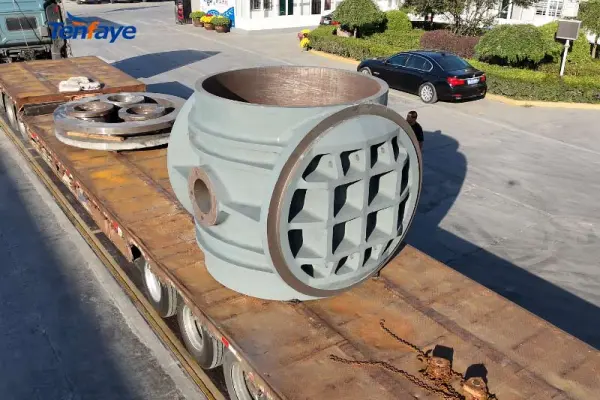
Quick Answer: Tenfaye commonly produces hydraulic valve steel castings in ZG20Mn and WCB. For higher water head, heavy sediment and demanding service conditions, ZG20Mn can be a suitable choice. WCB is commonly used for lower-pressure applications with relatively clean water and moderate operating conditions. The final material should be selected based on water head, pressure, flow velocity, sediment content, water quality and operating frequency.
Hydraulic valves are important components in water-control systems, including water turbine inlet valves, butterfly valves, ball valves and gate valves. During operation, their bodies and other cast steel components may be exposed to water pressure, high flow velocity, sediment erosion and repeated loading.For this reason, material selection should be based on the actual operating conditions rather than material grade alone.
The service conditions of a hydraulic valve can vary significantly from one project to another. Several factors should be considered before selecting the casting material.Water head and pressureHigh-head installations place greater pressure on valve bodies and other pressure-containing castings. The casting needs adequate strength, toughness and internal quality to withstand the service load.Sediment and erosionWater carrying sand or other solid particles can cause erosion, particularly around flow passages and sealing areas. For these applications, material selection and casting quality both need careful consideration.CavitationRapid changes in water pressure and flow velocity can create cavitation in some areas of the valve. The risk depends on the valve design and operating conditions, so material selection should be considered together with hydraulic design and surface condition.Repeated opening and closingFrequent valve operation creates repeated mechanical loading. A suitable combination of strength and toughness is therefore important for large steel castings used in these systems.
ZG20Mn or WCB?
ZG20Mn
ZG20Mn is a low-alloy cast steel commonly used for demanding steel casting applications. With appropriate heat treatment, it can provide a useful balance of strength and toughness.For hydraulic valve castings exposed to higher water head, heavier sediment or more demanding mechanical loading, ZG20Mn can be considered as a suitable material option.Its application can include large and complex valve bodies where good casting performance and stable mechanical properties are required.The actual performance of the casting depends not only on the chemical composition but also on the casting process and heat treatment. For applications with significant erosion or cavitation risk, the complete operating condition should be evaluated before confirming the material.
WCB
WCB is a widely used carbon steel casting grade for valves and pressure-containing components. It offers good castability and suitable mechanical properties for many conventional applications.For moderate-pressure service, relatively clean water and less aggressive operating conditions, WCB can be a practical option.When sediment erosion, corrosion or cavitation becomes more significant, other materials or additional surface protection may need to be considered.The choice between ZG20Mn and WCB should therefore be based on the actual equipment requirements rather than simply choosing the higher-grade material.
How Tenfaye Controls the Manufacturing Process
Material selection is only one part of producing a reliable hydraulic steel casting. The casting process, heat treatment and inspection also have a direct effect on the final quality.
Steel Melting and Refining
Tenfaye uses electric furnace melting with refining processes to control the chemical composition and cleanliness of the molten steel. The aim is to reduce inclusions and control the steel quality before pouring.
Casting Process Control
Large hydraulic valve castings often have complex shapes and varying wall thicknesses. The gating system, risers and chills need to be designed according to the casting structure to control solidification and reduce the risk of shrinkage defects.Tenfaye uses wood patterns and sodium silicate sand molding for large steel castings, with the process adjusted according to the component design and technical requirements.
Heat Treatment
Heat treatment is selected according to the material grade, casting structure and customer specifications. Normalizing and tempering or quenching and tempering may be used to obtain the required combination of strength, hardness and toughness.
Inspection
Depending on the technical requirements, hydraulic steel castings can be inspected using:
- Ultrasonic testing (UT)
- Magnetic particle testing (MT)
- Chemical composition analysis
- Mechanical property testing
- Hardness testing
- Dimensional and visual inspection
Inspection requirements can be defined according to the customer's drawings, specifications and applicable standards.
Tenfaye manufactures large hydraulic steel castings according to customer drawings and technical requirements. Applications include water turbine inlet valve bodies, butterfly valve bodies, ball valve components, gate valve components and other water-control castings.For a new project, the material should be evaluated together with the operating conditions, component design and manufacturing requirements.Send your drawing, material specification or basic operating parameters to Tenfaye for material and production evaluation.